 With the oceans covering 70% of the planet, it’s inevitable that, as a marine scientist, the opportunity and often necessity for international travel will present itself. Pursuing a career in a highly specialised field may mean leaving your home to work with the brightest and best. Or perhaps your interests are regional: the polar regions, for example, represent some of the most dynamic and urgent areas for oceanographic research in the current climate. A lot of us study science not just for interest in the subject but also Continue reading Overseas: the wonder and worries of a marine scientist abroad
The Elsevier boycott: journals that marine scientists may want to avoid
 So, you may or may not have heard about the plans of many academics (3000 at last count) to boycott journals published by Elsevier. The grounds for doing so were mentioned in this article by the Guardian; the most important passage is copied out below: Continue reading The Elsevier boycott: journals that marine scientists may want to avoid
We are now the ‘award-winning’ Words in mOcean
 It is official: we are now an ‘award-winning’ blog – about bloody time as well; we think we’re great! Thanks to Laura Bretherton (@Phytoplanktonic) for nominating us for the Liebster Blog Award, an accolade that is passed around the internet in order to raise awareness of up-and-coming blogs. I’m sure many of you are aware of Laura and her excellent (double award winning!) blog; if you are not, go check it out… NOW (well, after reading the end of this entry of course), and also follow her on Twitter. Continue reading We are now the ‘award-winning’ Words in mOcean
Let’s give marine science a bad name in schools
 Disclaimer: Words in mOcean is not responsible for any catastrophic set-backs to your career or life that may result from following the advice below.
The New Scientist recently ran an article with the title ‘Let’s give science a bad name in schools’. The argument put forward was that because science is often seen as boring by members of the general public, we need ‘rebellious’ role-models that today’s youngsters can identify with. Words in mOcean has compiled a list of five things you, as a marine scientist, can do to turn yourself into a world famous ‘scientific bad-ass’. Continue reading Let’s give marine science a bad name in schools
It takes a special kind of person to be a phytoplankton ecologist
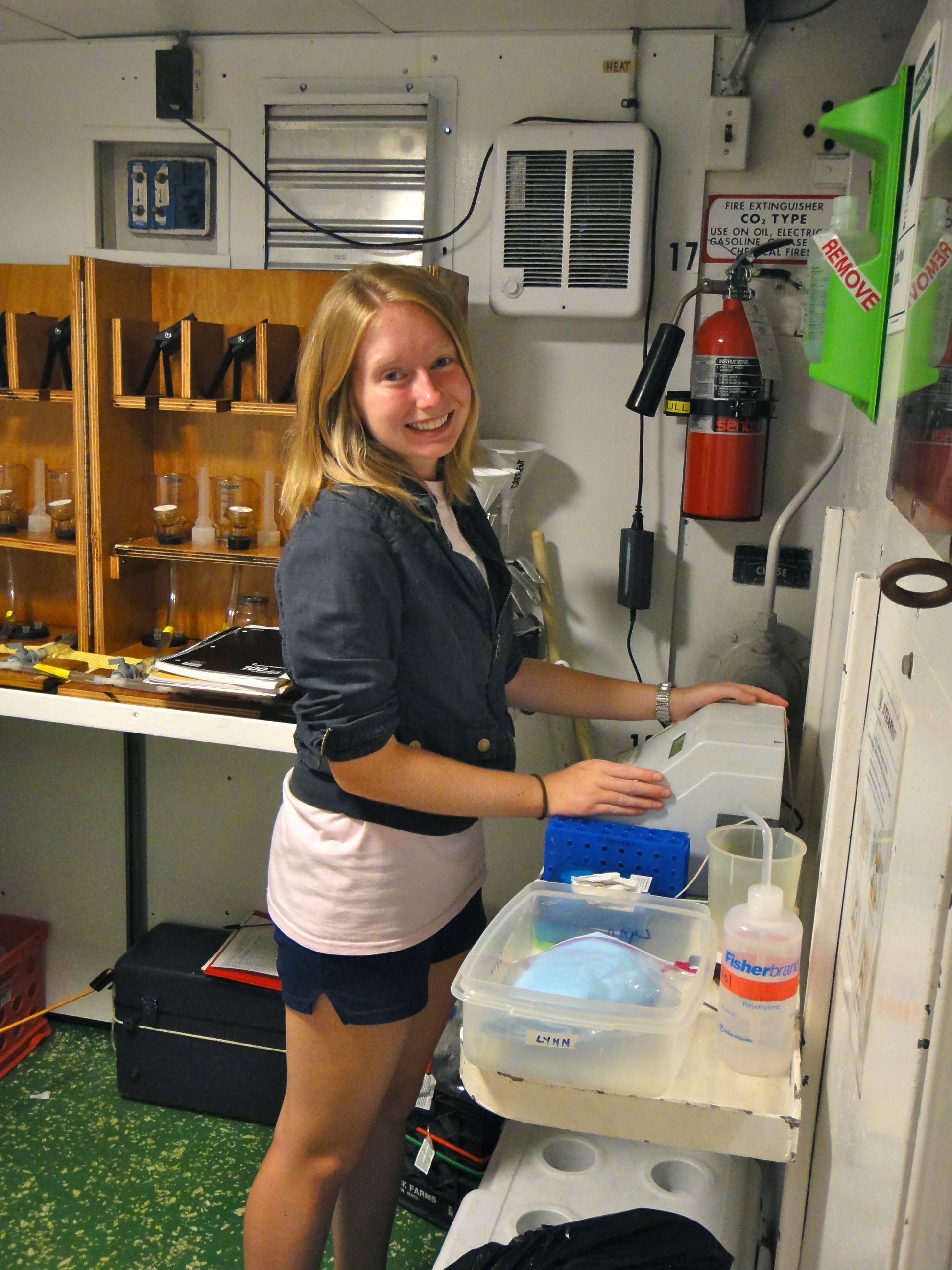 Within my first two years of undergrad, I’ve been lucky enough to participate in two research programs, at the UNC Institute of Marine Sciences in Morehead City, North Carolina, and at UT’s Marine Science Institute in Port Aransas, Texas. Despite nearly 1000 miles separating the two places, there were several striking similarities. Between the charmingly goofy professors, the diverse group of undergrads (many of which are sometimes crammed into one small dorm room), and the laid back atmosphere of beach towns, I felt like I have a pretty good knowledge of what a typical marine science research extravaganza entailed, that is, until all of that was crammed onto a 135-foot boat. Continue reading It takes a special kind of person to be a phytoplankton ecologist
The truth about the effects of climate change on Antarctica
Since the final climate change episode of ‘Frozen Planet’ aired this week I have encountered three attempts to discredit the science: one statement1 by Nigel Lawson and two articles2, 3 by Chrisopher Booker (the first of which accuses the BBC of presenting a one-sided argument, when if anything they made too much of an effort to be balanced – not once did they blame humans for the changes observed). In what I am sure is a pure coincidence, all of these retorts were commissioned by The Global Warming Policy Foundation. This registered ‘charity’ is a think tank, funded by secret donors, that claims to be:
Continue reading The truth about the effects of climate change on Antarctica
I’m a marine biologist, but…
…I wish that what I did sounded a bit less interesting.
Let me explain: I really do love what I do, but what I dread more than anything else is telling ‘non marine biologists’ about it. You see, there are (generally) only two responses that you get when you tell someone that you are a marine biologist:

1) “So what the hell are you going to do with that?” often accompanied by a look of bemusement suggesting that you are currently in the process of throwing your life away
Or, and I think this is actually worse…
2) “Wow, so do you get to work with (swim with) sharks, dolphins, whales, turtles (etc.) then?”
Living at sea: a clever solution to overpopulation or an unrealistic fantasy?
 After last month’s population milestone caused a lot of chatter about the consequences of continual unchecked population growth, there is no better time than now to begin considering where we’re meant to house people when space gets tight. Admittedly the problem is more about consumption and waste production than it is about physical space, but ideas for branching out and inhabiting new areas should be explored…and some, like this one, are downright amusing. A skyscraper competition in 2010 (via http://www.evolo.us/competition/water-scraper-underwater-architecture/; see image below) fuelled the imagination of some well-meaning architects, highlighting the idea of a self-sustaining floating city of sorts: the hO2+ scraper (which I assume is supposed to translate to waterscraper…shudder).
Continue reading Living at sea: a clever solution to overpopulation or an unrealistic fantasy?
Welcome to Words in mOcean
Welcome to Words in mOcean: a website where scientists and non-scientists can publish blogs on marine science.
With your help, I want to share my passion for the ocean. Aside from their aesthetic beauty and recreational utility, our oceans provide the air we breath, the water we drink, and a bountiful supply of food; they also regulate the Earth’s climate and in the future we will no doubt rely on them to provide a wide range of sustainable energy technologies – from algal biofuels, to wave and tidal power. However, our oceans are also under threat: they are warming, becoming more stratified, more polluted, and more acidic. They are also being over-fished on an enormous scale – a problem not only for our fish and chip shops, but also for the normal functioning of diverse, healthy oceanic ecosystems.
So, whether you are a member of the public with an interest in the ocean, a PhD or masters student wishing to blog about your project, or an academic wishing to communicate your research to the public, I challenge you to educate, to inform, and to inspire with your marine-themed blog posts.
David Aldridge (follow me on twitter: @D_Aldridge)
David Aldridge has a PhD in Marine Science from The National Oceanography Centre, Southampton. He is now planning his escape from academia. He is the founder and editor of Words in mOcean.
 Words in mOcean