Based on a discussion that took place at Challenger 2012
*****
In an opening speech that, thankfully, did not contain one utterance of the hateful phrase ‘going forward’ (I was poised ready to count them), Professor Ed Hill (director of the National Oceanography Centre, Southampton) talked about future challenges for funding UK oceanography: this talk, from the outset, felt like it was going to be depressing! Continue reading Up ship creek: More bad news for UK oceanography
 This debate, which took place at the Challenger 2012 marine science conference in Norwich, consisted of four speakers with a broad range of expertise including industry, public perceptions, marine and bird life impacts. Each speaker gave a brief presentation, which is summarised; a question and answer session followed this.
 The 15th Biennial Challenger Conference for Marine Science recently took place at the University of East Anglia in Norwich, on 3-6 September 2012. There were over 100 talks, 150 posters, a contentious debate on wind power, and a talk on how the UK can maintain its current research infrastructure. Over the next week or so Words in mOcean will be bringing you a recap of the best of the action, starting with four of the keynote lectures. Today’s recap is on the lecture given by Ken Buesseler, titled ‘Controls on and variability in particle export and flux attenuation in the ocean’s twilight zone’. Enjoy!
 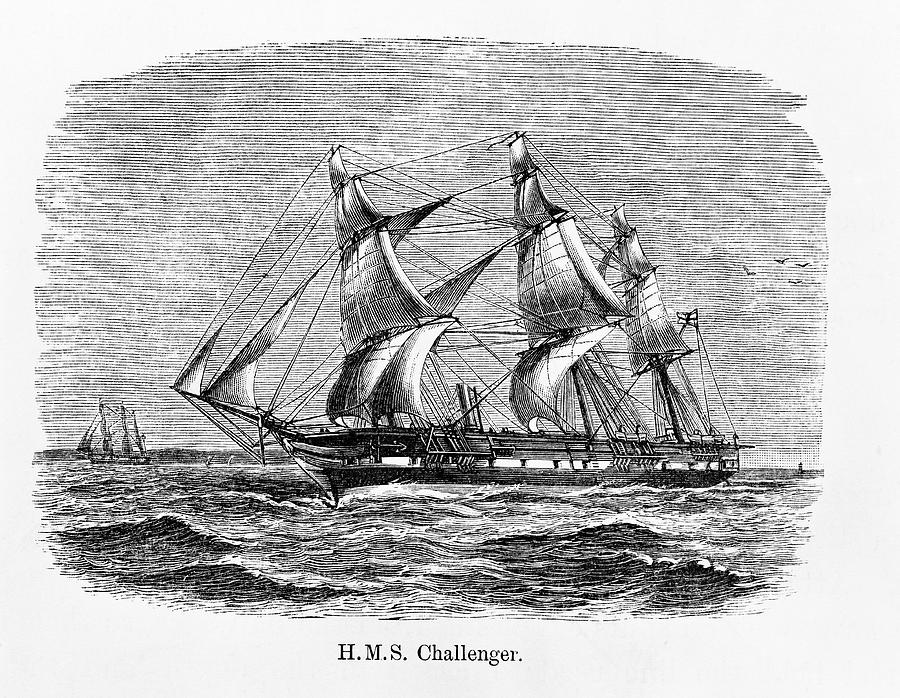 The UK was arguably the pioneer in the field of oceanography: James Cook included information on the oceans in his report on his famous voyages between 1768 and 1779; around about 1800 James Rennell wrote the first textbooks about currents in the Atlantic and Indian Oceans; Sir James Clark Ross took the first sounding in the deep sea in 1840; and the Royal Society sponsored the Challenger expedition (1872–76), the first true oceanographic cruise (laying the foundation for the field), traveling 70,000 nautical miles, resulting in a 50 volume report covering biological, physical and geological aspects of the ocean.

 Words in mOcean