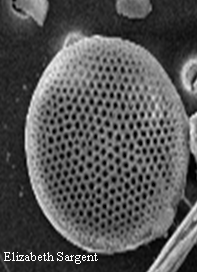
Diatoms, a group of phytoplankton, are amazing on a variety of levels. For one thing, their cell walls are made of silica meaning each one lives in a little glass house, and an elaborate one at that (Image 1). Those ornate ‘holes’ do have a function. One of the biggest hurdles phytoplankton face is avoiding sinking. Since silica is dense compared to seawater, this honeycomb-esque pattern reduces the weight of diatom, thus still allowing it to benefit from the protection provided by a ‘glass’ wall without causing it to sink rapidly. They also use other mechanisms to reduce sinking such as carbohydrate ballasting or air bubble entrapment among setae (spines). Continue reading Half of everything you [n]ever wanted to know about diatoms
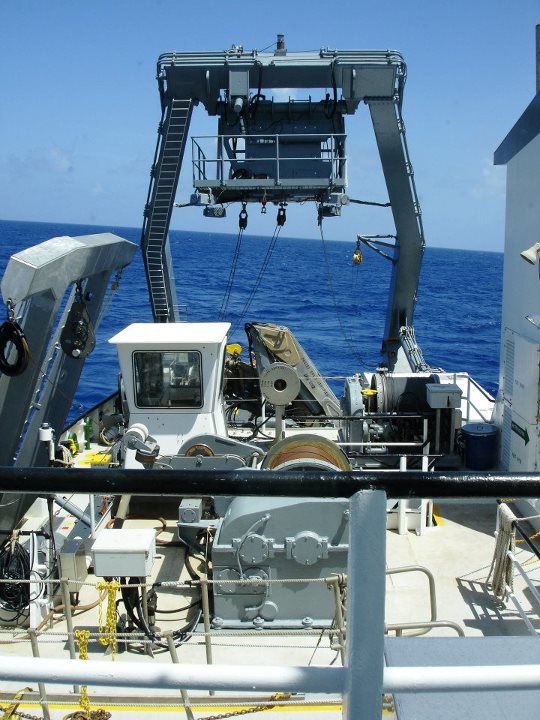
 This debate, which took place at the Challenger 2012 marine science conference in Norwich, consisted of four speakers with a broad range of expertise including industry, public perceptions, marine and bird life impacts. Each speaker gave a brief presentation, which is summarised; a question and answer session followed this.
 The 15th Biennial Challenger Conference for Marine Science recently took place at the University of East Anglia in Norwich, on 3-6 September 2012. There were over 100 talks, 150 posters, a contentious debate on wind power, and a talk on how the UK can maintain its current research infrastructure. Over the next week or so Words in mOcean will be bringing you a recap of the best of the action, starting with four of the keynote lectures. Today’s recap is on the lecture given by Ken Buesseler, titled ‘Controls on and variability in particle export and flux attenuation in the ocean’s twilight zone’. Enjoy!
 Words in mOcean