
Think of an extreme environment where life survives in the ocean. What springs to mind? The mind boggling pressures and eerie quiet of the deep-sea perhaps? Maybe the icy environments at the poles? Possibly even an estuary, where organisms are flung from one salinity extreme to the other on a daily basis. There is another extreme environment though, one which few of you probably even considered, one that covers about 30% of the planet and is currently expanding under the influence of climate change: large swirling systems of rotating currents that occur in the centre of oceans known as subtropical gyres. Continue reading Ocean Deserts: it’s a hard life in the tropics, but not if you’re small
 If you read my
  Some of the most progressive and interesting science happens when experts from different fields come together to tackle the same problem. Recently a group of plankton ecologists teamed up with some palaeontologists to assess how climate change impacts the growth of specific species of coccolithophores, both in modern times and during a period of warming 56 million years ago. They showed that
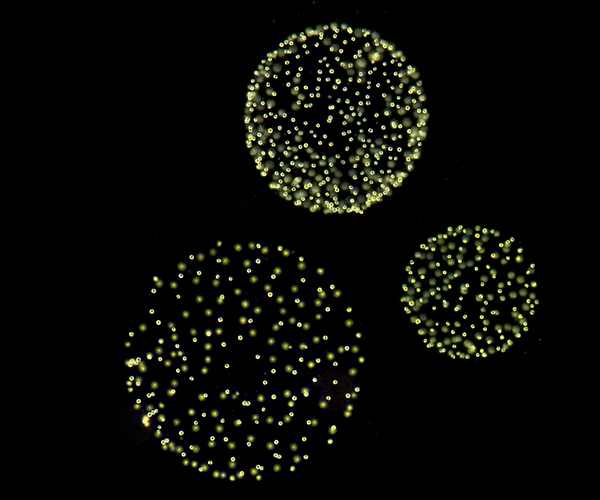
 Most of you reading this will be very familiar with the story of how ocean acidification is likely to impact marine calcifying organisms: increased carbon dioxide in the atmosphere is decreasing the pH of the oceans and is proposed to eventually lead to the dissolution of the shells of organisms made from calcium carbonate. It is difficult to work out in the lab, however, exactly what the impact of ocean acidification will be on marine calcifiers, as time pressures favour experiments that only assess short-term acclimation responses of organisms to ocean acidification (rather than long-term potential adaptations). Even when long term experiments have been carried out, they have only looked at the impact of pH change alone (see
 There is a strong chance that the proposed merging of the British Antarctic Survey (BAS) with the National Oceanography Centre (NOC) is
  Words in mOcean