 The 15th Biennial Challenger Conference for Marine Science recently took place at the University of East Anglia in Norwich, on 3-6 September 2012. There were over 100 talks, 150 posters, a contentious debate on wind power, and a talk on how the UK can maintain its current research infrastructure. Over the next week or so Words in mOcean will be bringing you a recap of the best of the action, starting with four of the keynote lectures. Today’s recap is on the lecture given by Jorge Sarmiento, titled ‘A biogeochemical paradigm shift’. Enjoy! Continue reading Challenger 2012 (Selected keynote lectures): Jorge Sarmiento (Princeton University) – A biogeochemical paradigm shift
Category Archives: Blog Posts
UK government hangs oceanography out to dry
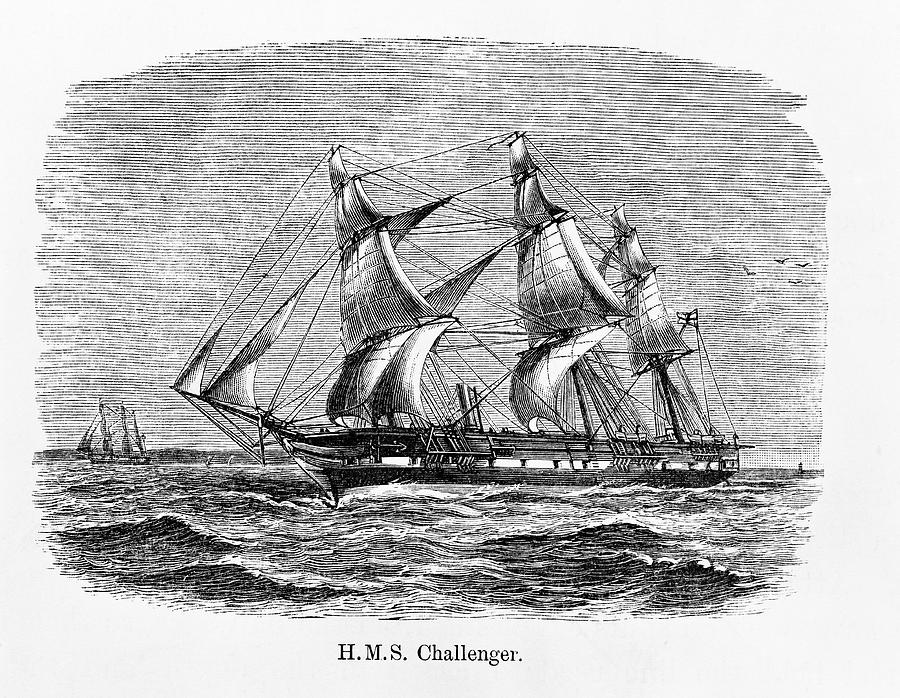 The UK was arguably the pioneer in the field of oceanography: James Cook included information on the oceans in his report on his famous voyages between 1768 and 1779; around about 1800 James Rennell wrote the first textbooks about currents in the Atlantic and Indian Oceans; Sir James Clark Ross took the first sounding in the deep sea in 1840; and the Royal Society sponsored the Challenger expedition (1872–76), the first true oceanographic cruise (laying the foundation for the field), traveling 70,000 nautical miles, resulting in a 50 volume report covering biological, physical and geological aspects of the ocean. Continue reading UK government hangs oceanography out to dry
Does phosphate thin foram shells?

Whenever I look at the iconic White Cliffs of Dover I am reminded of an interesting fact: much of the south of England is made from plankton. Yes, the chalk (calcium carbonate) found here is predominantly composed of plankton – calcifying single-celled plankton to be precise– that sunk to the sea-floor tens of millions of years ago, was compressed to form chalk, and then uplifted into its present position. The two most abundant calcifying planktonic organisms forming this chalk are the coccolithophores, which form stunning blooms visible from space, and the foraminifera (‘forams’ to their friends). Continue reading Does phosphate thin foram shells?
Communication and education: Teach me, please; I’m willing to learn

As I mentioned in my previous post, my research at the University of Texas Marine Science Institute secured a place for me among over two-thousand posters at the 2012 Ocean Sciences Meeting. I could talk about presenting this poster, the talks I went to, or the other activities arranged for the undergrads: including a field trip to the beautiful Great Salt Lake. I could even talk about the city itself, and walking through museums and Mormon tabernacles. However, I’d rather talk about two things I have been pondering since the conference: communication and education. Continue reading Communication and education: Teach me, please; I’m willing to learn
Electron Microscopy: plankton biologist discovers new toy

Out of all the interesting methodologies I have encountered in the first 18 months of my PhD, electron microscopy is indisputably the coolest, most gratifying, and enjoyable. I’m one of those people that loves whatever I’m doing in the moment, as I’m sure my office-mates could attest to. I often come back from trying something new full of enthusiasm and motivation, but that adoration usually dies down after a few days crunching numbers; I end up sitting at my desk pouting over new literature and troubleshooting the protocol. This hasn’t happened with electron microscopy. It has remained steadfast at the front of the pack in the race for my geeky little heart (yes, I actually rank my protocols…don’t we all?), and I don’t see it going anywhere anytime soon. Continue reading Electron Microscopy: plankton biologist discovers new toy
Phytoplankton to the rescue: the promise offered by algal biofuels

President Obama’s administration announced recently that as much as $14 million would be set aside to support the development of biofuels from algae. He was promptly mocked by some sections of the the US media and many of the Republican candidates. Serial ditcher of terminally ill wives, Newt Gingrich, proposed making T-shirts with the slogans, “You have Newt: Drill here, Drill Now, Pay Less. You have Obama: Have Algae, Pay More, Be Weird.” Continue reading Phytoplankton to the rescue: the promise offered by algal biofuels
Marine nitrogen fixation: the players
This is the second of two articles written by Elizabeth Sargent on the marine nitrogen cycle; the first article covered some of the basics and can be found here
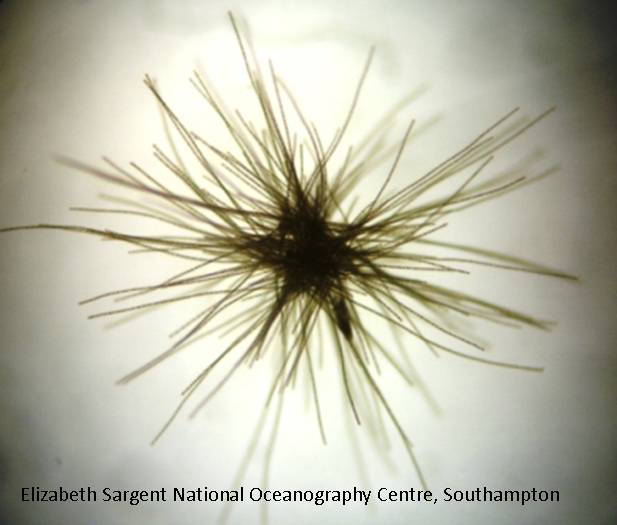
There are three main groups of nitrogen fixing organisms in the ocean: filamentous, heterocystous, and unicellular diazotrophs. The unicells are relatively new to the research scene (discovered in 1998), and are difficult to image due to their size, distribution, and our lack of knowledge about their lifestyle. I have some epifluorescent microscope images of unicellular diazotrophs, but you can get a good idea of what that looks like by picturing the night sky; it’s a whole lot of darkness and some tiny yellow dots. Continue reading Marine nitrogen fixation: the players
The marine nitrogen cycle
This is the first of two articles to be written by Elizabeth Sargent on the marine nitrogen cycle; the second article will go into more depth on nitrogen fixers (or, as Liz refers to them: ‘the diazotrophic organisms I hold near and dear’).

The marine nitrogen cycle is one of the most complicated biogeochemical cycles in the ocean. Nitrogen is a biologically limiting element and changes in its form, or concentration, can cause changes in the cycling of other elements, such as carbon and phosphorus. Marine nitrogen cycling has been and will continue to be an integral component of ocean biogeochemistry, so everyone should know at least the basics. Continue reading The marine nitrogen cycle
Overseas: the wonder and worries of a marine scientist abroad
 With the oceans covering 70% of the planet, it’s inevitable that, as a marine scientist, the opportunity and often necessity for international travel will present itself. Pursuing a career in a highly specialised field may mean leaving your home to work with the brightest and best. Or perhaps your interests are regional: the polar regions, for example, represent some of the most dynamic and urgent areas for oceanographic research in the current climate. A lot of us study science not just for interest in the subject but also Continue reading Overseas: the wonder and worries of a marine scientist abroad
It takes a special kind of person to be a phytoplankton ecologist
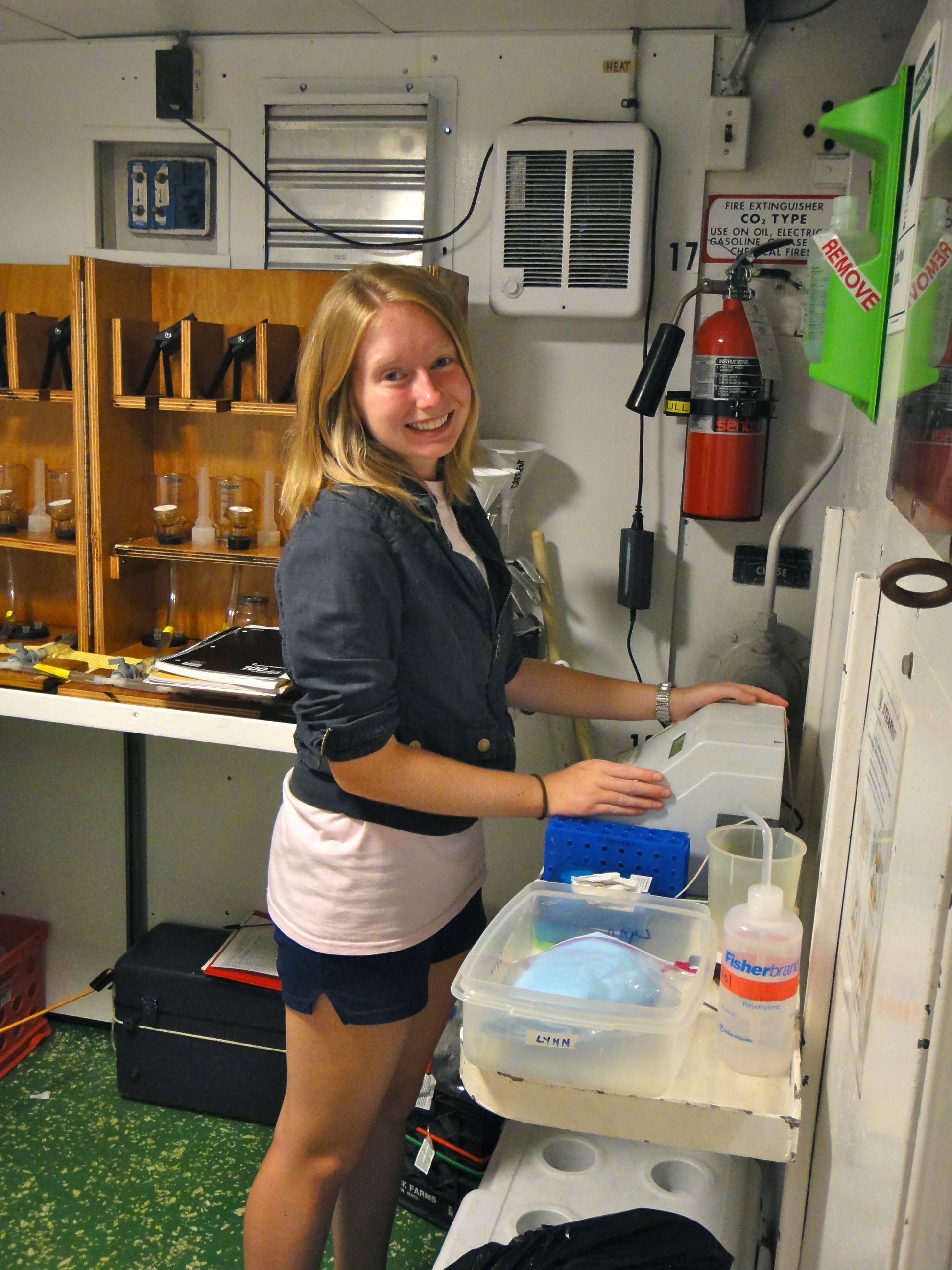 Within my first two years of undergrad, I’ve been lucky enough to participate in two research programs, at the UNC Institute of Marine Sciences in Morehead City, North Carolina, and at UT’s Marine Science Institute in Port Aransas, Texas. Despite nearly 1000 miles separating the two places, there were several striking similarities. Between the charmingly goofy professors, the diverse group of undergrads (many of which are sometimes crammed into one small dorm room), and the laid back atmosphere of beach towns, I felt like I have a pretty good knowledge of what a typical marine science research extravaganza entailed, that is, until all of that was crammed onto a 135-foot boat. Continue reading It takes a special kind of person to be a phytoplankton ecologist
 Words in mOcean